Flooring made of vinyl, PVC or polypropylene - what are the differences?
PVC, vinyl, polypropylene, who is supposed to know? All are plastics and all are used to make floor coverings, but their price varies. They also have different properties and again the well-known rule applies that the cheapest solution does not have to be the smartest.
We will not deal with the difference between PVC and vinyl, because they are essentially the same. PVC is the abbreviation for the word polyvinyl chloride, so vinyl is the middle part. The name PVC is usually used for flooring in rolls, but by vinyl you should think of the same flooring sold in tiles of different sizes. However, it must be emphasized that this is just a habit that does not always have to be followed.
Polypropylene is a completely different material, but to make it not so easy, floor tiles are also made from it (like vinyl). The ones made of polypropylene use a different click system, but the different properties of both materials are far more important. Although they are both thermoplastics, they have different durability and other attributes. So how do polypropylene tiles differ from those made of vinyl?
Polypropylene has a more complicated click system
If we start from the habit that PVC rolls and vinyl tiles, we can say that vinyl tiles are laid simply like a puzzle, the tiles fit into each other exactly thanks to their click system. Plastic tiles made from polypropylene have two different click systems. On two sides there are so-called male locks and on the other two there are female locks that fit into each other. After laying the difference can no longer be seen, but it must be taken into account when laying. It doesn't matter how the tile is turned.
Vinyl tiles can withstand higher loads
If we take a closer look at PVC and PP tiles, we will probably notice that vinyl tiles are usually smooth and polypropylene tiles usually have a grid structure. This is due to the character of both materials, which determines how they can be shaped. Vinyl tiles therefore withstand higher loads and also have better impact resistance. Polypropylene is more brittle and can be damaged by a dropped hammer, for example.
Many people think that the grooves on the underside of the polypropylene tiles are intended to drain away moisture, but that is not the case. They have no other meaning than that this material can be shaped better and is used less - the result is then cheaper.
Polypropylene is suitable for sports fields
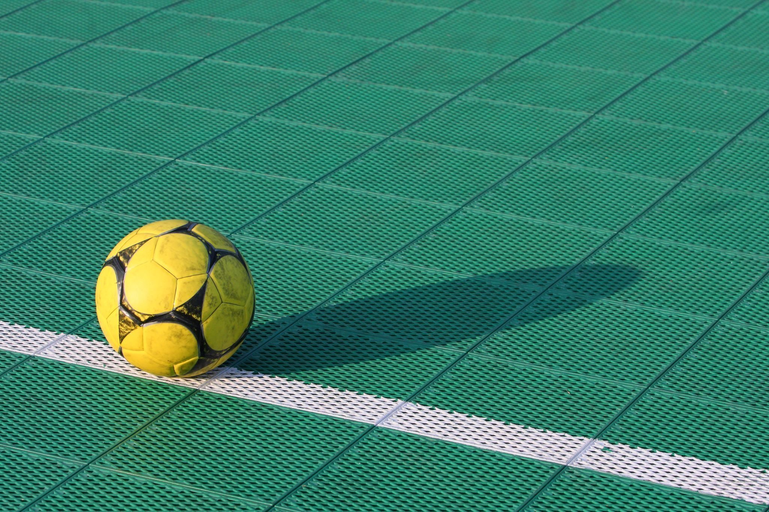
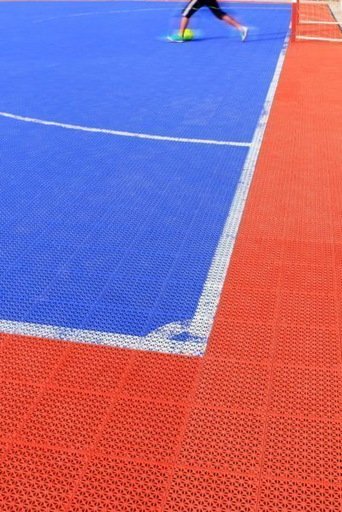
PVC tiles can be bent, they have more of a rubber structure, polypropylene panels are harder. This has to do with the aforementioned brittleness and strength, but a big difference is the feeling when you stand on such a floor. PVC tiles are used in shops, sports halls, doctor's offices and canteens because they are softer. Polypropylene is also widely used as flooring in stadiums and sports halls or as outdoor flooring in sports fields, but unlike PVC, it is not suitable for children's playrooms because of its hardness.
PVC and PP have excellent resistance to chemicals, oils, salts in winter and also water. That's why both materials are often used in garages and workshops.
Vinyl is quieter
Vinyl flooring is known for its perfect sound insulation. This comes from the properties we have already talked about – the flexibility and the softness. The tiles are soft, adapt to the floor and dampen noise when driving or walking. Polypropylene does not provide any dampening, in fact it makes noise when you walk on it. If the surface is not level, the tiles will move and rattle. This can of course be prevented by leveling the subsurface well, for example with self-leveling compound.
So which is better for your needs?
It depends on where the floor is laid. The differences between these two materials can be summarized quite simply. For an average Garage floor, where the low price is crucial, polypropylene tiles can be used. However, if you need durability for heavier traffic or a floor in a room where you walk frequently, PVC (or vinyl, it depends what you call it) is more suitable.
Latest news
14.09.2026
Floor laying from terramondi – now with even more service & flexibility!