How to Reduce Dust Accumulation in Your Warehouse or Workshop
- with the Right Flooring
Dust is a daily occurrence in many warehouses and workshops. Often, however, the cause lies not only in work processes but also in the flooring itself. Older concrete surfaces, in particular, can release fine particles due to regular wear and tear. With the right flooring, this source of dust can be significantly reduced, making it easier to clean the work area.
Why Dust Is Such a Problem in the Workplace
A consistently high level of dust doesn’t just affect the appearance of a workplace. Fine particles settle on goods, machinery, and work surfaces, increasing the cleaning effort. Even sensitive technical equipment can be compromised by dust that penetrates it.
While regular cleaning helps in the short term, it does not always eliminate the root cause. If the dust is generated directly by a worn-out floor, a long-term improvement is often only possible by treating or replacing the surface.
Where Dust Most Often Comes From
There are various sources of dust in warehouses and workshops. In addition to daily work activities and dirt brought in from outside, the condition of the existing concrete floor plays a particularly important role.
Concrete Crumbles Under Load
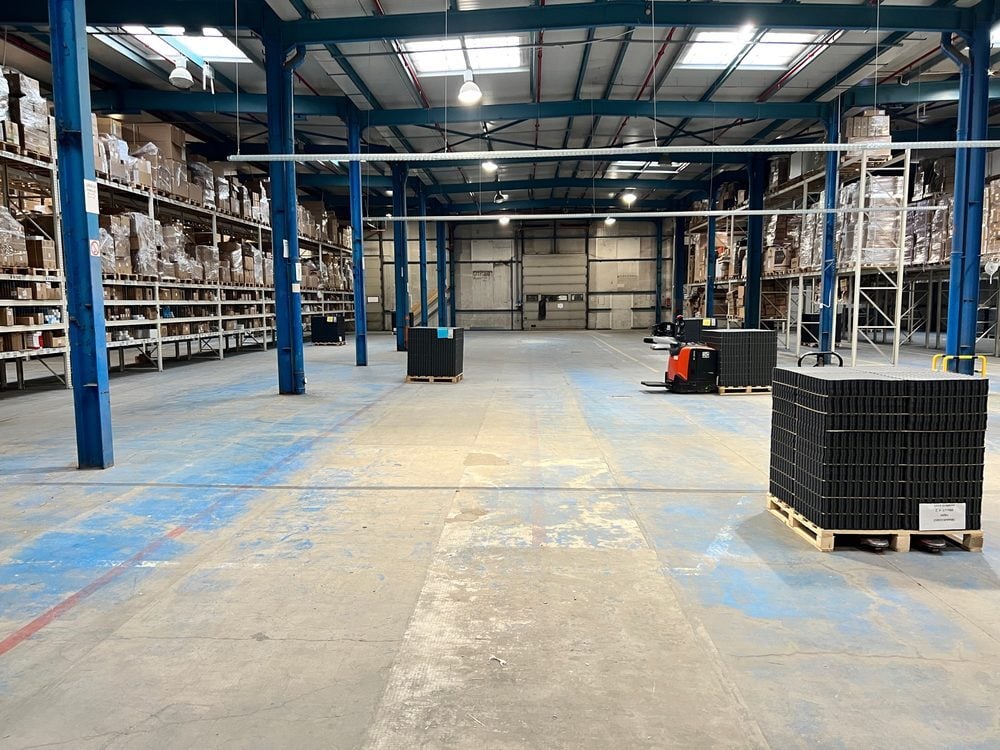
Concrete surfaces are subjected to heavy wear and tear during daily operations. Transport carts, heavy pallets, and falling objects can damage the surface over time. Repeated mechanical stress causes small particles to break off, which then spread throughout the room as fine dust.
Cracks and chips trap dirt
Damaged floor surfaces provide numerous spots where dust, sand, and other contaminants can accumulate. When vehicles drive or people walk over them, these particles are redistributed. Larger irregularities can also make it more difficult to transport goods.
Cleaning Does Not Address the Root Cause
Even thorough cleaning provides only a temporary solution if the subfloor continues to release dust. Therefore, the focus should not be solely on improving cleaning practices but also on addressing the condition of the floor itself.
What a Floor Should Offer to Reduce Dust Formation
A suitable floor covering should be durable, easy to maintain, and designed to withstand the daily demands of the facility. A durable surface that reliably covers the existing subfloor is particularly important.
Reliably covering the dusty subfloor
New flooring can prevent dust from an older concrete surface from entering the work area directly. This requires a subfloor that is sufficiently stable and load-bearing. Any major damage should be repaired accordingly before installation.
Quick and Easy Cleaning
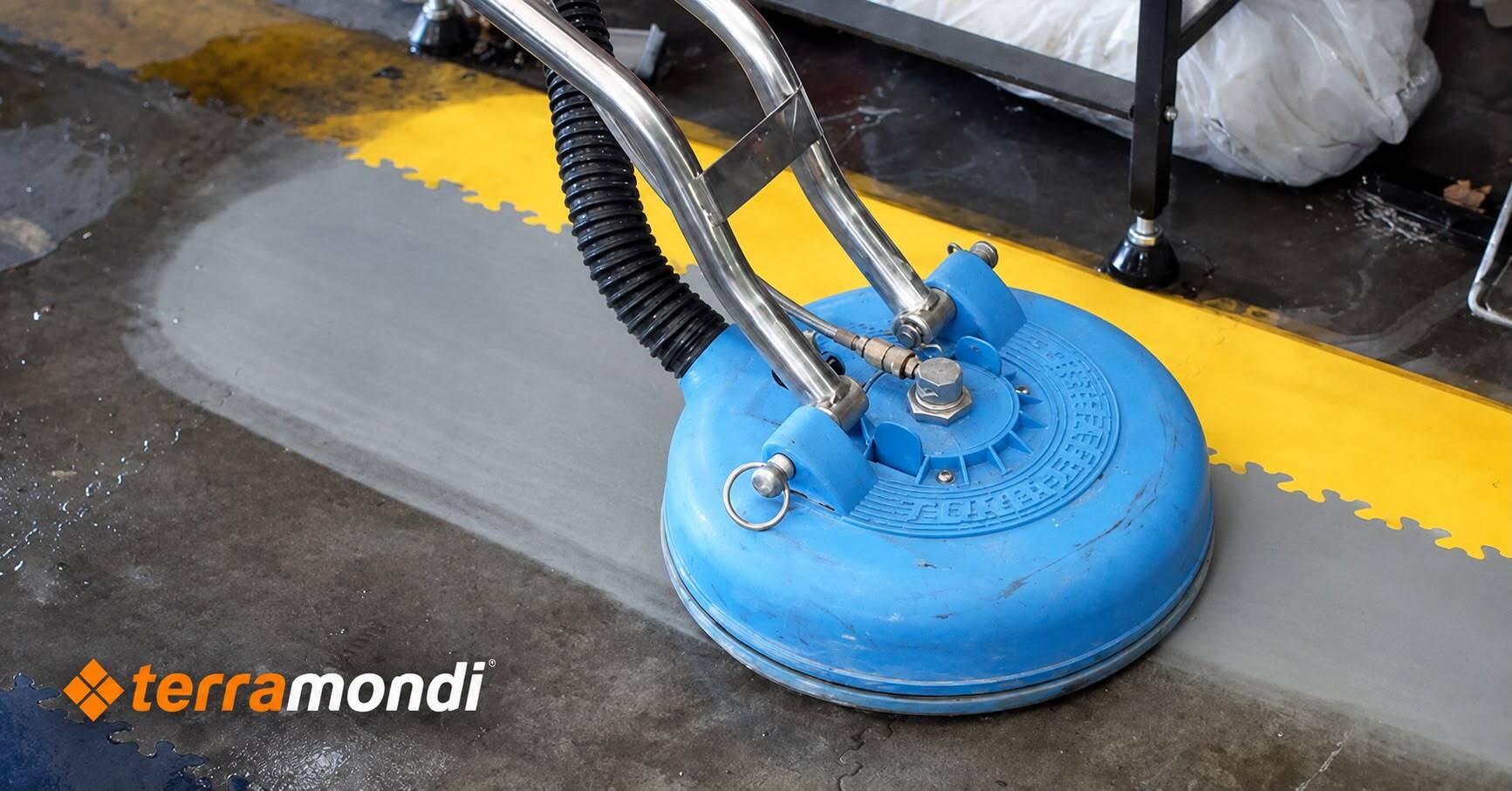
Dirt is inevitable in workshops and storage areas. However, a low-maintenance, low-absorbency surface makes regular cleaning much easier. Depending on the flooring, both manual and appropriate mechanical cleaning methods can be used.
Durability for Daily Wear and Tear
An industrial floor must withstand a variety of stresses. These include, for example, traffic from transport carts, the movement of work materials, and contact with certain oils and chemicals. It is crucial that the flooring be selected to suit the specific application.
Options for Dealing with a Dusty Floor
Various methods are available to reduce dust formation. The most appropriate solution depends on the condition of the existing floor and the operational requirements.
Thorough Cleaning of the Old Concrete
Intensive cleaning can help remove accumulated dirt and loose particles. However, if the concrete continues to release new dust due to wear and tear, the effect will be limited.
Coating the Concrete
A suitable floor coating can seal the surface and reduce dust generation. To achieve this, the substrate must be properly prepared. Under heavy mechanical stress, coatings can wear down over time.
Epoxy Resin or Polyurethane Coating
Synthetic resin coatings create a seamless and durable surface. However, they require careful substrate preparation. Moisture and existing damage must also be addressed before application.
PVC Interlocking Tiles
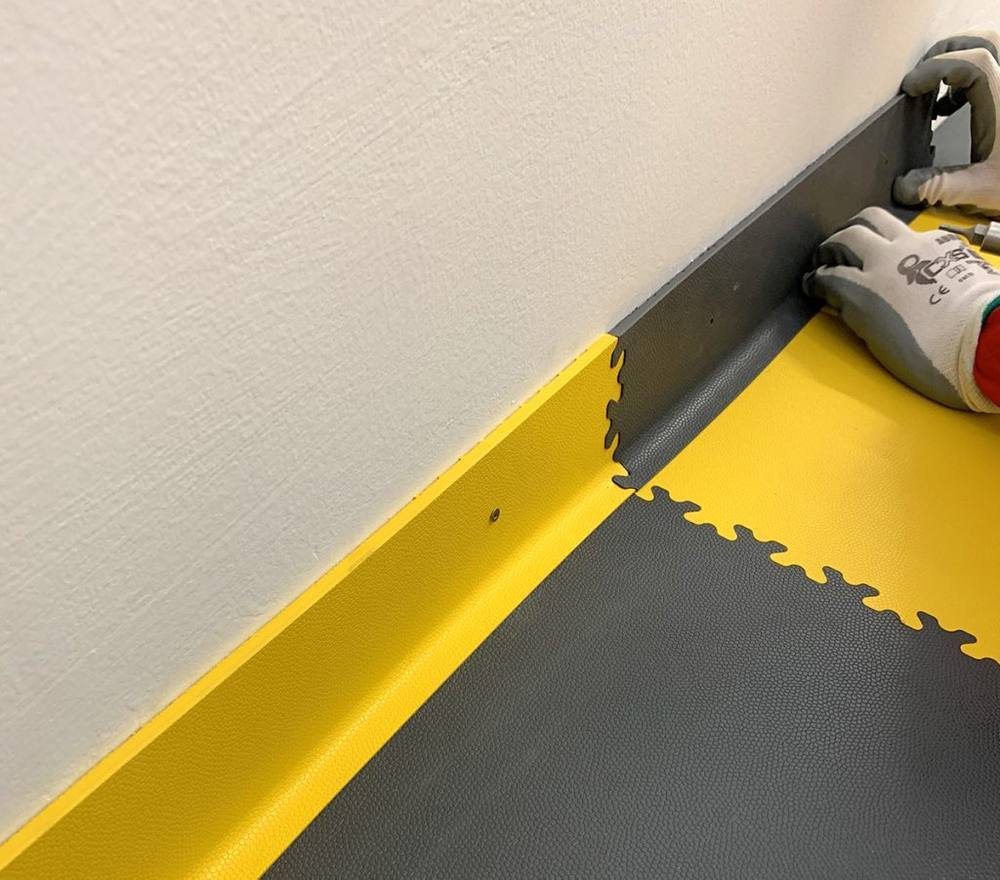
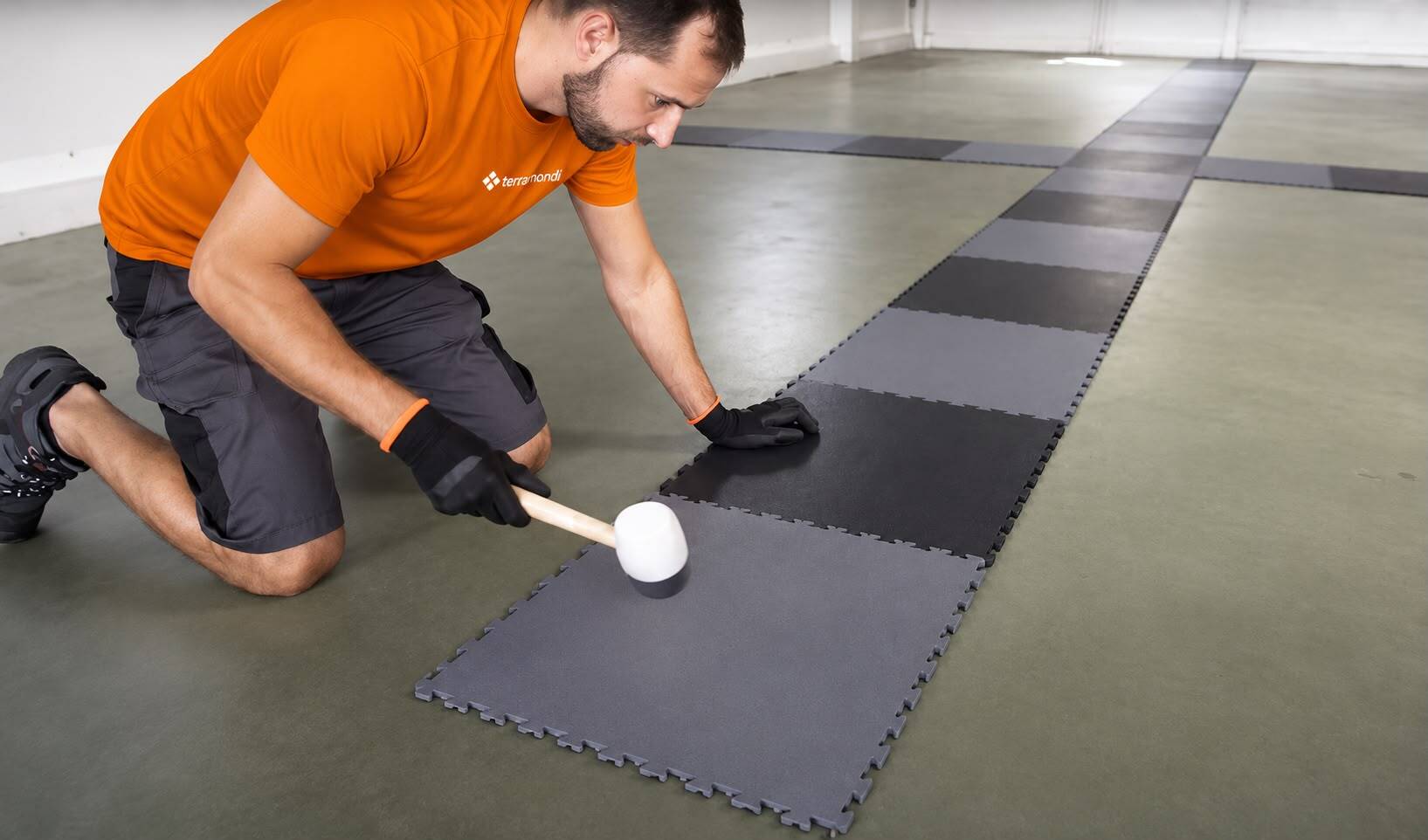
PVC click tiles offer a practical way to install new flooring over older concrete surfaces. Thanks to their interlocking system, many styles can be installed without needing to be fully glued down.
The surface is easy to maintain and can reduce direct abrasion of the underlying concrete. Another advantage is that individual damaged tiles can be replaced as needed.
How terramondi Helps Reduce Dust Formation
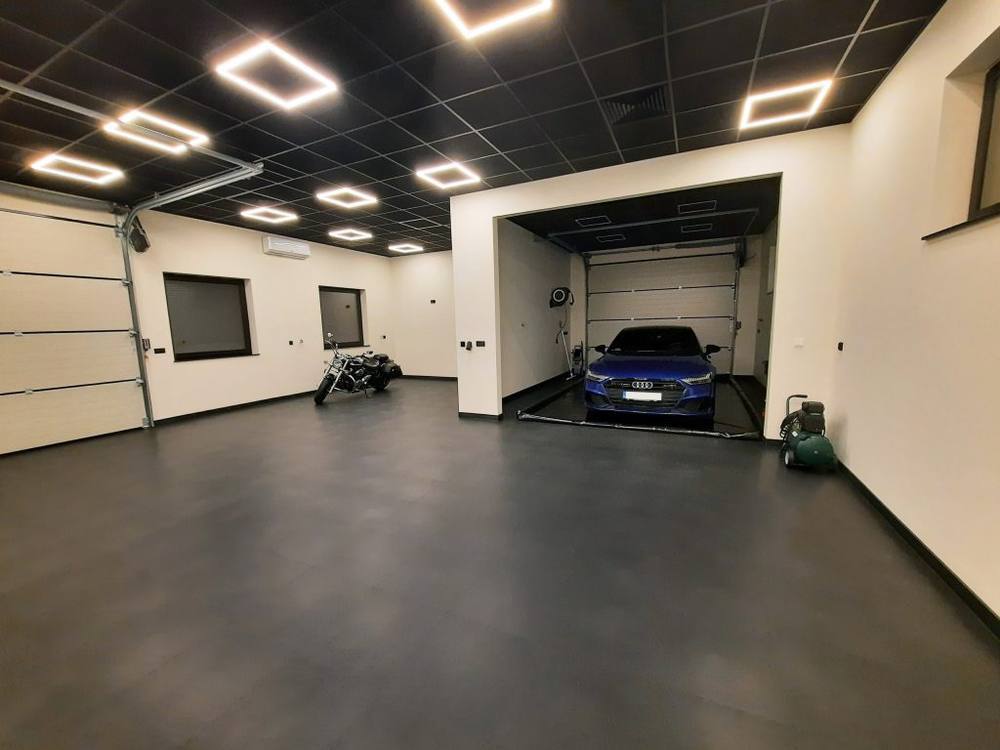
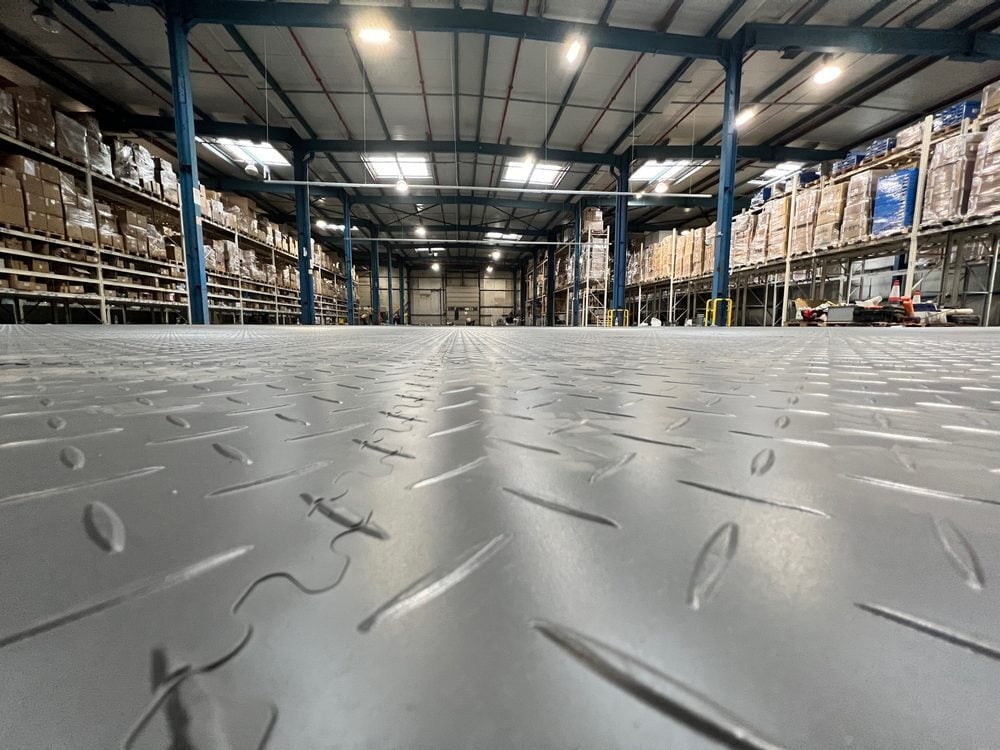
terramondi’s PVC click tiles allow for the functional design of warehouses, workshops, and commercial spaces. These modular floor coverings offer a practical alternative to completely replacing existing concrete surfaces.
Instantly covers old, dusty concrete
The PVC tiles form a new wear layer over the existing floor. This reduces direct contact with the worn concrete surface and limits the release of concrete dust into the work area.
Simplifies daily cleaning
The low-maintenance surface allows for easy removal of dust and dirt. Depending on the level of soiling, suitable cleaning agents, mops, or cleaning machines can be used.
Withstands demanding everyday use
Durable PVC flooring solutions are available for commercial areas. When selecting a solution, particular attention should be paid to the expected traffic, surface, and point loads. Additional load distribution may be required under heavy machinery or shelving.
Enables lightning-fast replacement of individual elements
The modular click system simplifies the repair of individual floor sections. If a tile is damaged, it can be replaced selectively—provided it was installed correctly—without having to replace the entire floor.
Makes the space clearer and more organized
Using different tile colors allows you to visually distinguish between work areas, walkways, and storage zones. This creates a clearer spatial layout and supports the organization of operational processes.
How to Further Reduce Dust Accumulation in Your Facility
In addition to suitable flooring, other measures help keep dust levels as low as possible:
- Keep entryways clean: Dirt-trapping mats and regular cleaning prevent large amounts of dust and sand from being tracked in from outside.
- Keep work surfaces clear: Organized storage areas and unobstructed walkways make cleaning easier.
- Vacuum up dust immediately: Suitable extraction systems should be used during grinding, cutting, or milling operations.
- Adjust cleaning intervals: Depending on usage and the degree of soiling, a regular cleaning schedule is recommended.
Cleaning Schedule According to the Care Sheet
Cleaning should always follow the care instructions for the respective flooring. Loose dirt can be removed regularly, and the tiles can be wiped down with a damp cloth as needed.
For heavier soiling, only suitable cleaning agents and cleaning methods should be used. Harsh solvents or unsuitable abrasives can damage the surface.
Frequently Asked Questions
Why does a concrete floor in a warehouse constantly generate dust?
Daily mechanical stress can cause the concrete surface to gradually wear down. This creates fine particles that are spread throughout the room by people and vehicles.
Can PVC tiles be installed on crumbling concrete?
In principle, this is possible if the subfloor has sufficient load-bearing capacity. Significant damage, unevenness, and loose areas must be inspected in advance and repaired if necessary. The installation specifications for the respective product are decisive.
How do you protect PVC tiles under heavy shelving?
For high point loads, suitable underlays can be used to distribute the load. The permissible load depends on the technical properties of the tiles used.
Can PVC tiles in a workshop withstand flying sparks during grinding?
That depends on the properties of the specific flooring. Hot metal parts and sparks can damage PVC surfaces. Appropriate protective measures are required when performing such work.
How quickly can dusty concrete in a warehouse be covered with tiles?
Installing PVC click tiles is often relatively quick. The exact time required depends on the area, the preparation of the subfloor, and the spatial conditions.
Read more
Discover more information and practical tips on selecting, installing, and maintaining PVC flooring at terramondi.