The Perfect Floor for Detailing Studios
- Design, Functionality, and Durability
A detailing studio places different demands on the floor than a conventional garage or workshop. Here, water, cleaning chemicals, polishing work, and technical equipment all come into play. At the same time, the design of the space plays an important role, as the floor contributes significantly to the overall professional impression.
A suitable floor covering must therefore not only withstand daily wear and tear but also be both functional and visually appealing. In this article, you’ll learn which characteristics are crucial and what you should look for when making your selection.
What the Floor in a Detailing Studio Must Withstand
In a detailing studio, the floor is subjected to varying stresses every day. In addition to moisture and chemical cleaning agents, the weight of the vehicles and various tools also take a toll on the surface.
Water and Moisture Every Day
Water regularly gets on the floor during car washes, rinsing, or from wet tires. Unlike in ordinary garages, this isn’t just occasional moisture—it’s an integral part of the daily work routine.
An unsuitable floor covering can absorb moisture, develop stains, or suffer long-term damage. In addition, standing water increases the risk of slipping.
The floor should therefore:
- absorb as little water as possible
- dry quickly
- provide adequate slip resistance even when wet
Harsh Chemicals
Numerous care and cleaning products are used in vehicle detailing. These include car shampoos, wheel cleaners, degreasers, waxes, and sealants. Some of these products contain ingredients that can damage sensitive floor surfaces.
A suitable floor must therefore remain durable even with regular contact with cleaning chemicals. Otherwise, discoloration, material changes, or stubborn stains may occur.
The following factors are therefore crucial:
- suitable chemical resistance
- easy cleaning
- a durable and resilient surface
Point Loads from Vehicles and Equipment
Vehicles transfer their weight to the floor through relatively small tire contact patches. This creates high point loads that can cause deformation if unsuitable materials are used.
In addition, jack stands, compressors, tool carts, and other equipment place stress on the floor. High compressive forces can occur, particularly under small casters or feet.
The floor should therefore:
- withstand high loads over the long term
- maintain its structural integrity under vehicle tires
- provide a stable surface even with regular use
The floor’s aesthetics are part of the overall impression
In a professional detailing studio, it’s not just the result of the vehicle detailing that counts. The surroundings also influence how customers perceive the quality of the work.
In a professional detailing studio, it’s not just the results of the vehicle detailing that matter. The surroundings also influence how customers perceive the quality of the work.
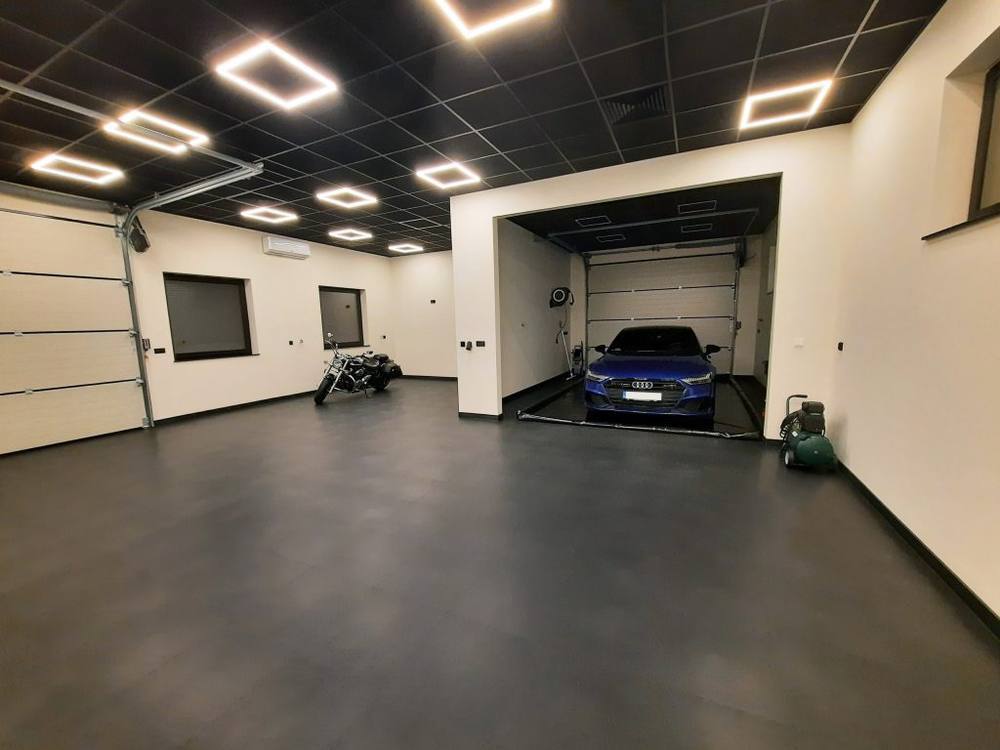
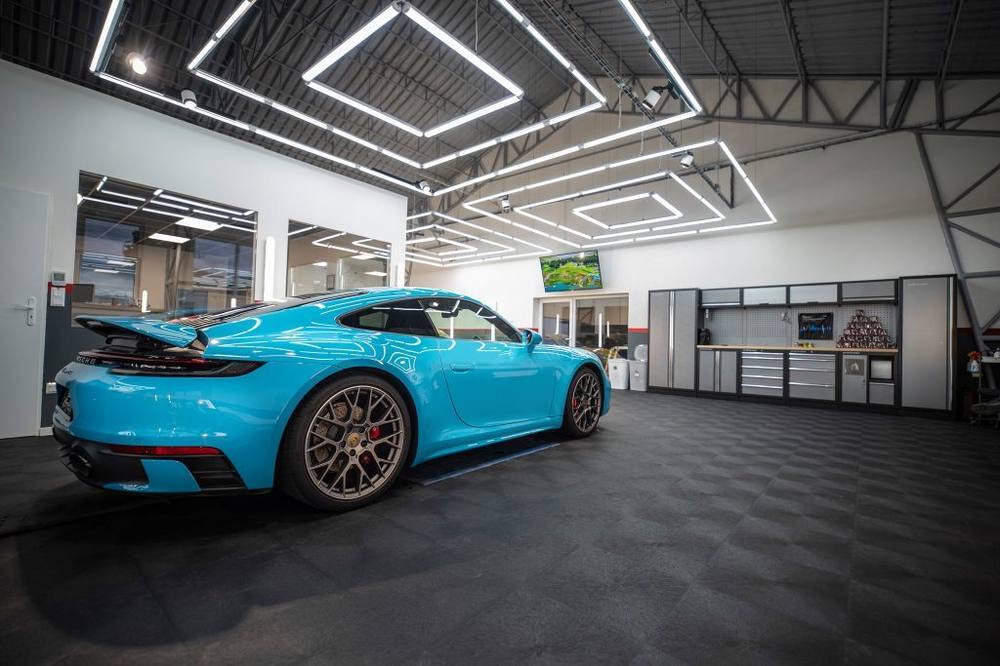
A well-coordinated interior design with appropriate lighting, high-quality furnishings, and attractive flooring conveys professionalism. The floor is therefore not just a functional work surface, but an important component of the studio’s overall design.
What spoils the impression of the floor in a detailing studio
In daily operations, water, polishing compounds, tire debris, and cleaning chemicals can leave visible marks. Especially on unsuitable surfaces, stains, scratches, or discoloration can occur that are difficult to remove.
A heavily worn floor can detract from the studio’s overall appearance. Even meticulously detailed vehicles don’t look their best in an unsuitable environment.
What the Floor of a Detailing Studio Should Look Like
A high-quality studio floor should not only look impressive at the grand opening but also meet the demands of daily use.
Key characteristics include:
- Low-maintenance appearance: The floor should be easy to clean and remain visually appealing even during daily operations.
- Stain resistance: A surface with low absorbency makes it easier to remove dirt and cleaning product residue.
- Visual harmony in the space: Colors and surfaces should complement the studio’s furnishings and desired style.
What Types of Flooring Are Used in Detailing (and Their Limitations)
Various flooring solutions are available for detailing studios. However, not every material is equally suitable for daily exposure to water, chemicals, and heavy vehicles.
Concrete
Concrete is found in many garages and older workshops and is often the most cost-effective initial solution.
Untreated concrete, however, has a porous surface and can absorb water, oil, and other liquids. This leads to discoloration and staining. In addition, mechanical abrasion can create fine concrete dust, which is undesirable during vehicle detailing.
Coated Concrete Does Not Solve the Problem
A coating can protect the surface and make cleaning easier. However, proper surface preparation and the selection of suitable materials are crucial.
If adhesion is insufficient or the surface is subjected to heavy use, coatings can peel off or become damaged. A professionally applied coating, on the other hand, can provide a long-lasting solution.
Epoxy Floors
Epoxy resin floors are frequently used in commercial spaces. They provide a uniform, seamless surface and are available in various colors.
Depending on the design, however, scratches, abrasion marks, or damage may occur. In areas with regular contact with water, care must also be taken to ensure adequate slip resistance.
Repairs can also be time-consuming, as repaired areas may differ in color or sheen.
Vinyl or Standard PVC Roll Flooring
Vinyl flooring and PVC roll flooring offer numerous design options and are often easy to clean.
However, not all variants are suitable for high point loads. If unsuitable products are used, indentations and deformations can occur under heavy vehicles or machinery.
In addition, the installation of many roll-type floor coverings requires full-surface adhesion. This can result in more extensive repair work if damage occurs later.
Why PVC tiles are being used more and more frequently in detailing
Modular PVC click tiles represent an interesting alternative to traditional floor coverings. They combine a robust wear layer with flexible design options and relatively easy installation.
Depending on the product, they offer the following advantages:
- low water absorption of the tile material
- slip-resistant surfaces
- high load-bearing capacity when properly installed
- easy cleaning and maintenance
- quick installation thanks to a modular click system
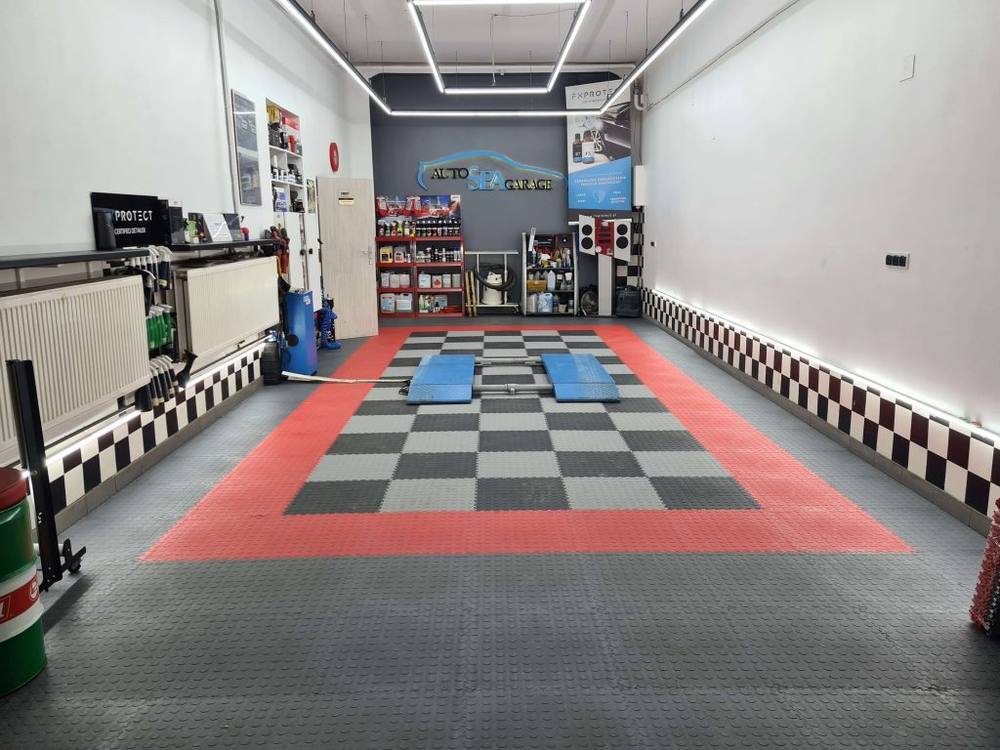
Another advantage is the ability to customize the design. With a variety of colors and finishes, you can distinguish between wash areas, work areas, and display areas.
Chemicals and Terramondi Tiles: What to Watch Out For
Even with durable PVC flooring, spilled chemicals should be removed as soon as possible. Certain cleaning agents, solvents, or oil-based substances can cause discoloration or material changes if left in contact for an extended period.
Chemical resistance depends on the specific product and the substance used. Therefore, it is recommended to follow the technical specifications and care instructions for the selected Terramondi tiles.
Suitable cleaning agents should be used. Avoid aggressive solvents and highly abrasive cleaning tools unless they are expressly approved for the flooring.
Which Terramondi tile types are suitable for detailing
When selecting a suitable flooring, it’s not just about color and surface texture. The decisive factors are, above all, the mechanical stress, the use of the respective area, and the desired interior design.
For heavily used work surfaces and high-profile studio areas, different PVC tile designs may be appropriate.
TM Mechanic – Durability First
Robust PVC industrial tiles are ideal for areas with regular vehicle traffic and high mechanical stress.
They are designed to meet the demands of commercial work surfaces and, depending on the model, offer a durable and easy-to-maintain surface.
Typical applications include:
- Washing areas with proper drainage
- Work surfaces for vehicle detailing
- Areas with frequent vehicle traffic
When selecting a product, consider the permissible load capacities and slip resistance of the specific product.
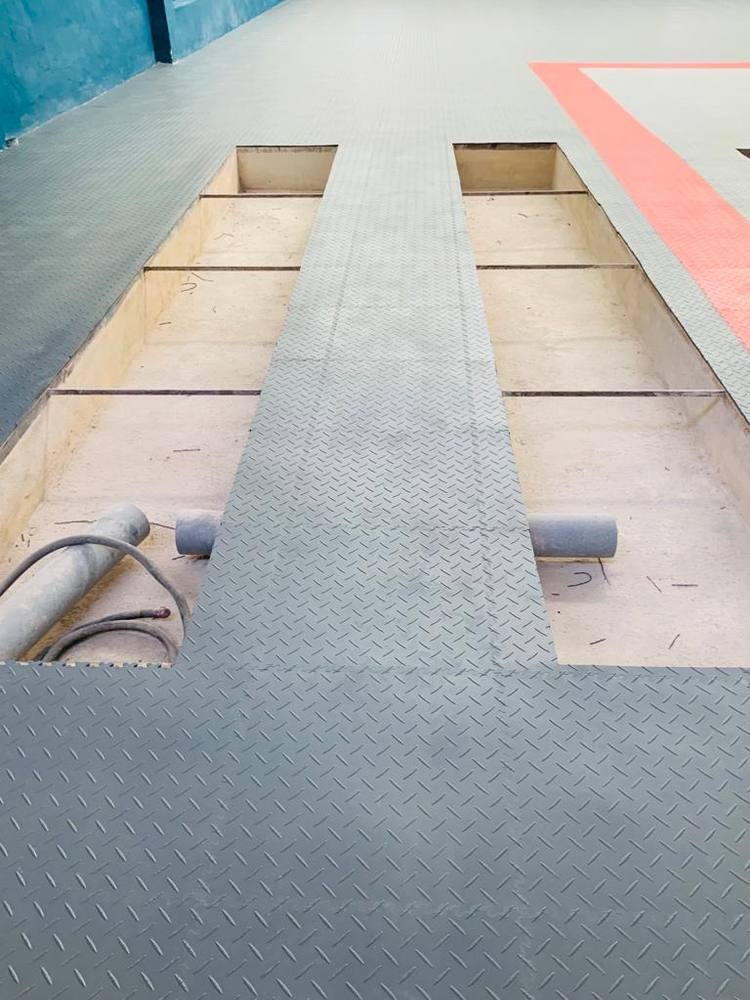
TM Invisible – when you want a clean, sophisticated look
For detailing studios where aesthetics play a particularly important role, PVC tiles with hidden seams are an attractive solution.
The TM Invisible design features a discreet seaming system. This creates a visually seamless floor surface that gives the studio a modern and high-end appearance.
This design is particularly well-suited for:
- Polishing areas
- Vehicle handoffs
- Showrooms and presentation areas
By combining different tile designs, functional work areas and high-end zones can be customized to suit individual needs.
How to Plan the Floor in a Detailing Studio (Zoning, Drainage, Colors)
In addition to choosing the right materials, planning the floor layout is also crucial. Different activities place varying demands on the flooring.
A well-thought-out layout improves workflows while ensuring the studio has a clear and organized design.
Zoning the Space
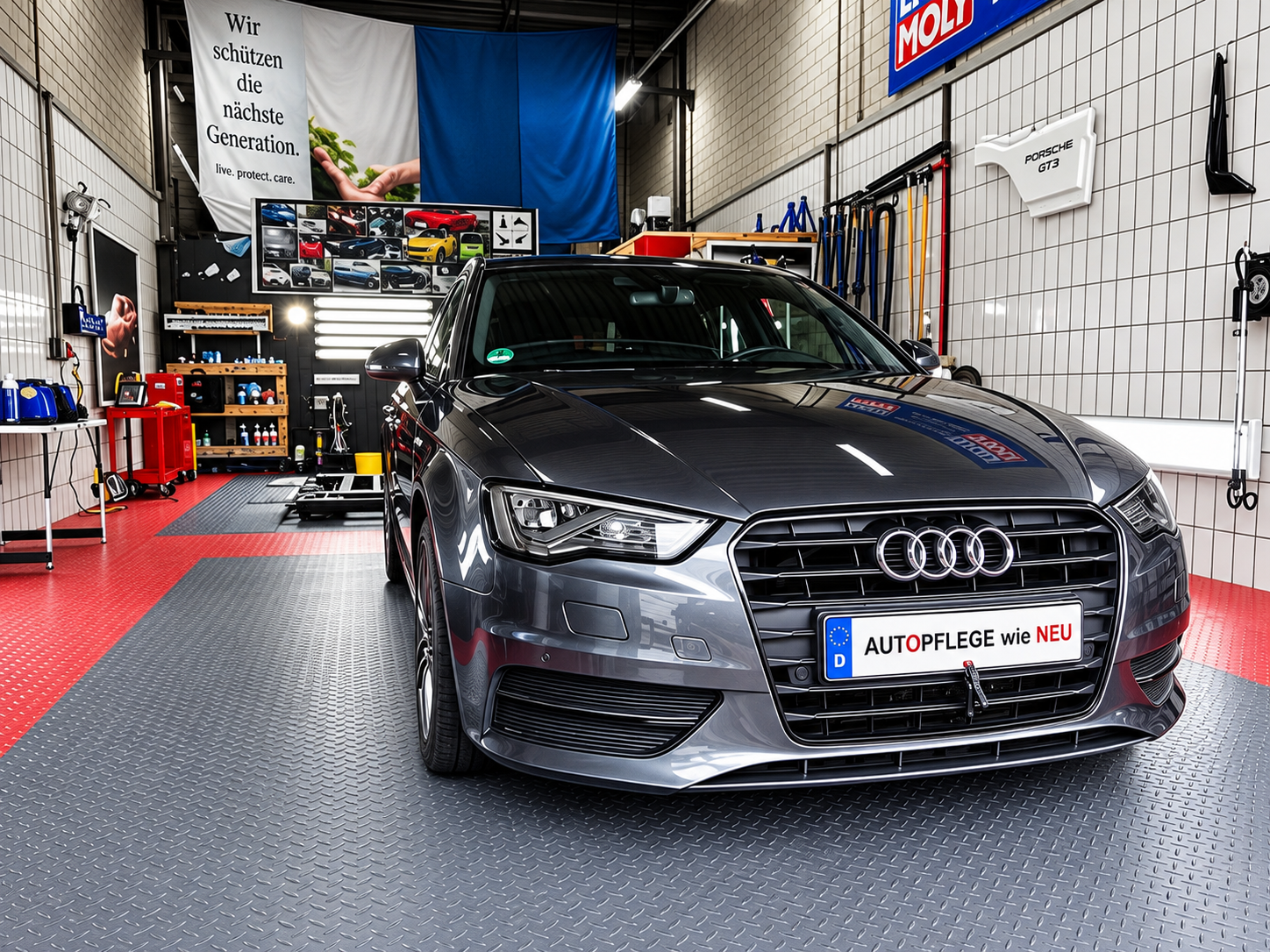
A detailing studio can be effectively divided into different functional areas. By using different floor colors, these zones can be visually separated from one another without the need for additional walls or structural dividers.
Wet Zone (Washing Zone)
In the washing zone, moisture resistance, slip resistance, and reliable water drainage are top priorities.
Since water and cleaning chemicals are used here regularly, the flooring should be suitable for these conditions. Existing floor drains must also be taken into account during planning.
Work and Polishing Zone
In this area, vehicles are polished, sealed, and detailed. A stable floor surface and ample space for maneuvering work carts, stools, and other equipment are essential.
A suitable floor covering should support daily workflows and allow for easy cleaning.
Presentation and Handoff Area
This is where fully prepared vehicles are presented and handed over to customers. Therefore, in addition to functionality, the visual design is a key focus.
A uniform floor covering with coordinated colors can enhance the studio’s appearance and effectively showcase the vehicles.
Water Drainage and Slope
Since car washing regularly generates large amounts of water, drainage must be taken into account during the planning phase.
The following are important:
- a suitable slope toward the floor drains
- consideration of existing drainage systems
- avoiding areas where water accumulates permanently
When installing PVC click tiles, it is also important to determine how moisture can be drained from beneath the flooring. An existing subfloor structure is no substitute for a professionally planned drainage system.
Especially in wet areas, it is essential to ensure that water does not remain trapped beneath the tiles and that the structure can dry sufficiently.
Colors and Overall Appearance
The choice of colors influences not only the design but also the lighting effects and the overall perception of the studio.
- Light colors: Gray and other light shades make rooms appear more inviting and spacious. However, dirt may become visible more quickly.
- Dark colors: Black and anthracite give the studio a modern, high-end look. At the same time, they reflect less light.
- Contrasting colors: Different colors allow for the visual identification of work areas, walkways, and presentation areas.
With the right combination, you can create a space that is both functional and visually appealing.
Frequently Asked Questions
Are PVC tiles slippery in the wash area of a detailing studio?
That depends on the specific surface texture and the specified slip resistance. Tiles suitable for wet areas should be selected. In addition, effective water drainage is important to prevent standing water.
Can the TM Invisible series withstand vehicle traffic just as well as the TM Mechanic series?
The permissible load varies depending on the product and version. Therefore, the technical specifications of the respective tiles should be compared. Different requirements may apply to high-traffic work areas than to display areas.
Can tires leave marks on the studio floor?
Yes. Under certain conditions, contact between tires and PVC can cause discoloration. This depends, among other factors, on the tire composition, temperature, and duration of contact. Appropriate protective measures can help minimize such changes.
How long does it take to install the flooring in a detailing studio?
PVC click tiles can often be installed relatively quickly. Under the right conditions, installation in sections is also possible. The exact duration depends on the area, the subfloor, and the necessary preparatory work.
In what colors can the tiles be ordered for the studio?
PVC tiles are available in a variety of colors, depending on the product line. This allows work areas to be customized and different zones to be visually highlighted. The available colors depend on the specific Terramondi product line.