Expansion Joints in PVC Floor Tiles
-Why They Are Important and What Happens If They Are Missing
PVC click-lock tiles can be installed quickly and easily in many areas. However, there are a few important points that must be considered during installation. These include, in particular, expansion joints. If the necessary clearances from walls and other fixed structural elements are not maintained, the floor may warp due to temperature fluctuations. Careful planning helps prevent such damage from the start.
What Expansion Joints Are and Why They Matter for PVC Tiles
An expansion joint refers to the clear space between the flooring and adjacent fixed structural elements. These include, for example, walls, columns, door thresholds, or permanently installed machinery.
PVC reacts to temperature changes. The material expands when heated and contracts again at lower temperatures. This property is inherent to the material and is completely normal.
To allow the tiles to accommodate these movements, they need sufficient space. If they are placed directly against a wall or another fixed obstacle, stress can build up, leading to visible deformation.
Why PVC Tiles React to Temperature
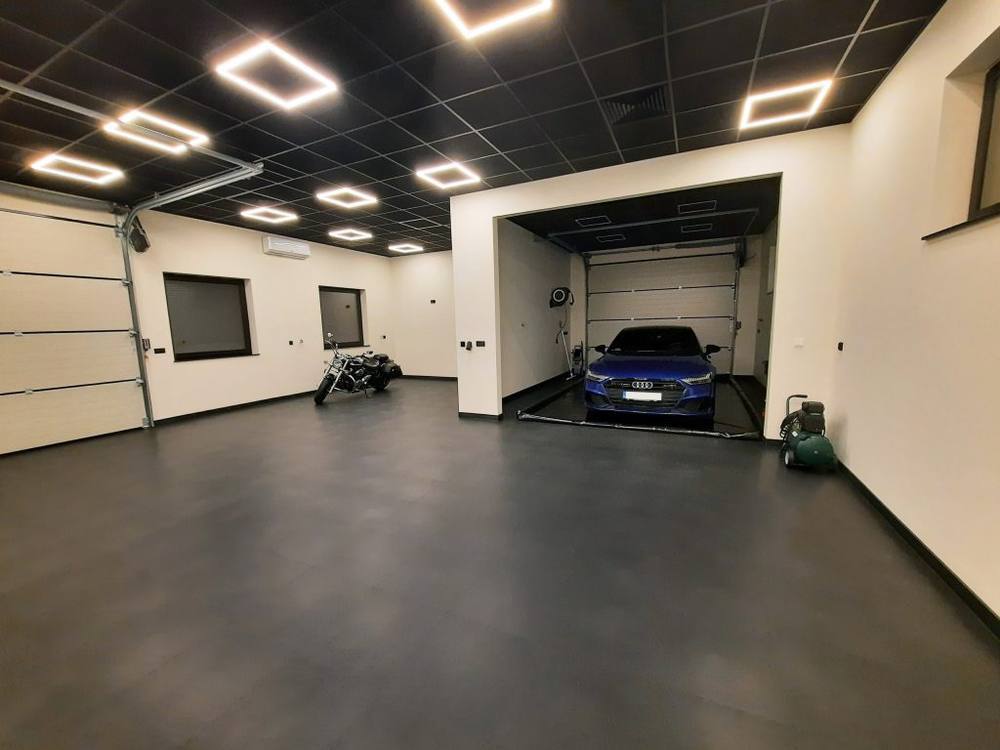
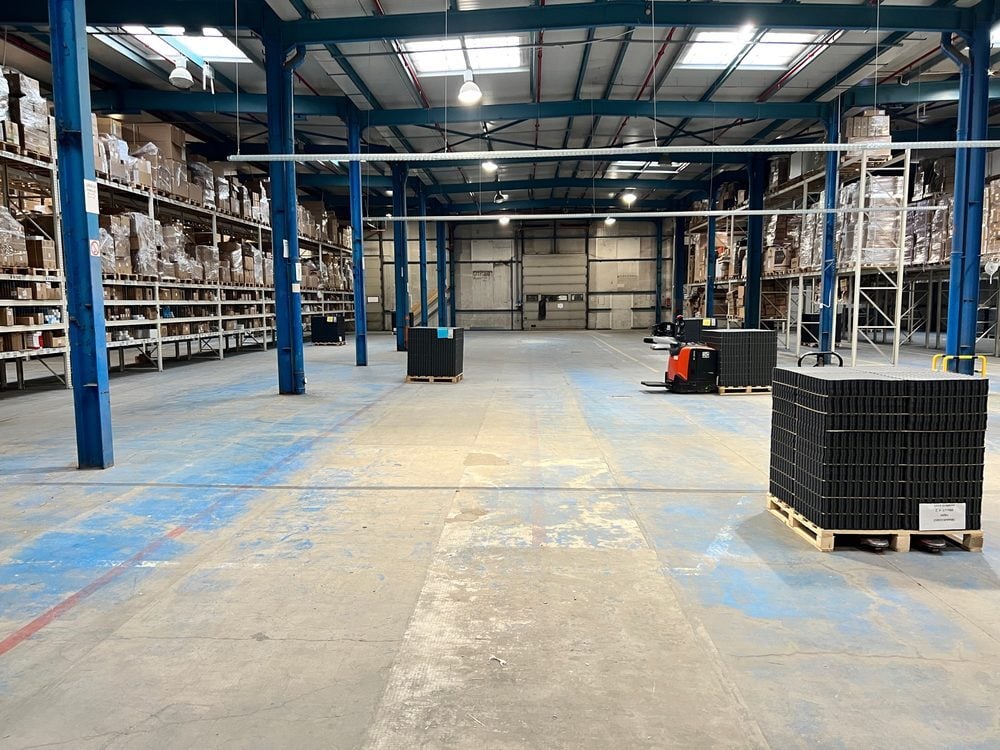
Temperatures can fluctuate significantly in garages, workshops, warehouses, and production areas. While rooms can cool down considerably in the winter, they can heat up significantly in the summer due to sunlight or heat sources.
Machinery, heating equipment, or parked vehicles can also affect the temperature in specific areas.
PVC click tiles are available for a variety of applications. However, to ensure the floor performs its function over the long term, the respective installation guidelines must be followed. Expansion joints play a key role in this regard.
What Happens When Expansion Joints Are Missing
Missing expansion joints often go unnoticed immediately after installation. At first, the floor surface appears level and even. It is only when there are significant temperature changes that the effects become noticeable.
If the floor cannot expand sufficiently, stresses build up within the surface.
The floor begins to warp and lift
A typical consequence of missing expansion joints is the formation of waves or bulges in the flooring.
When the tiles expand as temperatures rise but have no room at the edges, the resulting pressure can push individual areas upward.
Such unevenness not only detracts from the appearance but can also make the space difficult to use. Especially in garages, workshops, or storage areas, they can be a nuisance when driving over them or cleaning.
The click connections are subjected to unnecessary stress
The individual PVC tiles are connected to one another via their click connections, creating a continuous floor surface.
If this surface cannot move sufficiently, the connections are subjected to additional stress. Under sustained high stress, they can deform or become damaged.
In the worst-case scenario, individual tiles lose their firm bond and must be replaced.
You can expect unnecessary work during the repair
If the floor has already buckled, retroactive adjustments are often necessary.
For non-adhesive click tiles, it may be sufficient to loosen the affected edge areas and cut the tiles to create the necessary clearance from fixed structural elements.
Depending on the extent of the damage, individual tiles may need to be replaced. Proper installation can help avoid such additional work
Where Expansion Joints Are Needed
Expansion joints do not need to be considered exclusively on exterior walls. Other fixed structural elements can also restrict the movement of the flooring.
These include, for example:
- Walls and room partitions
- Columns and load-bearing supports
- Stairs and door thresholds
- Permanently anchored shelves
- Machinery and technical equipment
- Radiators and adjacent structures
- Transitions to other floor coverings
- Gates, niches, and structural penetrations
As a general rule: Wherever a fixed structural element could impede the floor’s expansion, the necessary space for movement must be accounted for.
For heavy fixtures resting directly on the tiles, additional measures for securing them may be necessary.
How to Proceed Before Actual Installation
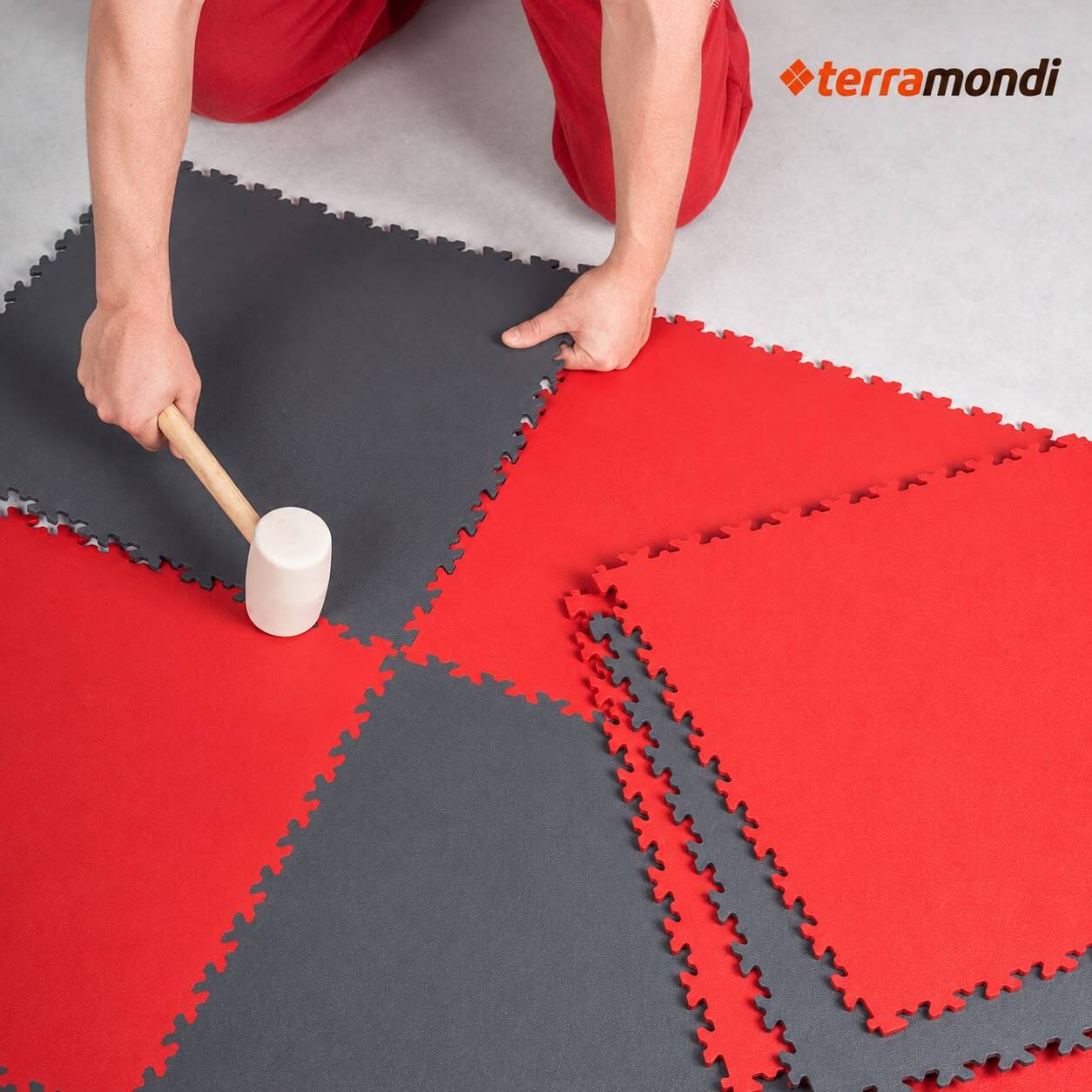
Professional installation begins with careful preparation of the subfloor and planning of the floor area.
Before laying the first PVC click tiles, the following points should be checked:
- Condition of the subfloor: The surface should be sufficiently level, load-bearing, and clean. Any major damage or unevenness must be repaired as necessary.
- Room temperature and acclimatization: The PVC tiles should be allowed to acclimate to the room temperature before installation. The required duration depends on the manufacturer’s instructions.
- Fixed obstacles: Columns, shelves, machinery, and other permanently installed elements must be taken into account during planning.
- Transitions and connections: Particular attention must be paid to the proper design of the edge areas, especially around doors, gates, and pipe penetrations.
- Floor Layout: Tiles should be arranged so that very narrow edge pieces are avoided as much as possible.
- Width of Expansion Joints: The required spacing depends on the specific product, the room size, and the expected temperature changes.
- Covering Edge Joints: Baseboards or suitable edge profiles can be incorporated into the planning phase.
Careful work is especially important when cutting the last row of tiles. The edge pieces must not simply be pressed tightly against the wall.
How wide should the expansion joint be?
The required width of the expansion joint depends on several factors. These include the PVC flooring system used, the size of the installed area, and the expected temperature fluctuations.
For many PVC click tiles, edge clearances of approximately 10 mm are recommended. However, this value is not mandatory for every product.
Different requirements may apply for larger areas or under specific temperature conditions.
When installing terramondi PVC floor tiles, you should therefore follow the instructions in the respective technical data sheet and installation guide.
When Expansion Joints Alone Are Not Enough
In certain situations, expansion joints alone may not be sufficient to ensure a permanently stable floor surface.
This can be the case, for example, with intense direct sunlight, significant temperature fluctuations, or heat sources in the immediate vicinity.
Heavy stationary machinery and permanently installed fixtures can also place special demands on the installation process.
Depending on the flooring system, it may be necessary to additionally secure individual areas or to bond the tiles with a suitable adhesive.
Whether and under what conditions bonding is necessary should be determined based on the respective manufacturer’s specifications.
How to Elegantly Cover Expansion Joints
A properly installed expansion joint does not have to detract from the floor’s appearance.
With suitable finishing solutions, the necessary edge clearances can be designed in a visually appealing way.
Possible solutions include:
- Baseboards and floor moldings
- Suitable elastic joint materials
- Finishing and transition profiles
- Ramp edges at doors and transitions
- Carefully cut edge tiles
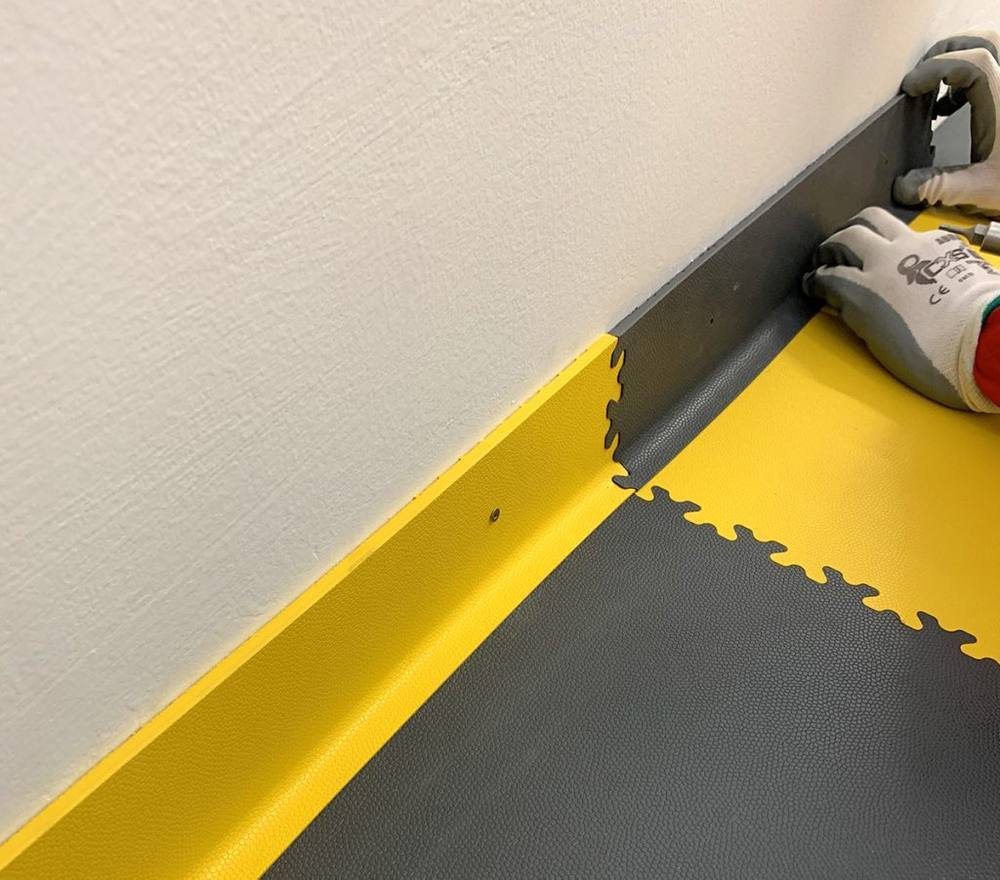
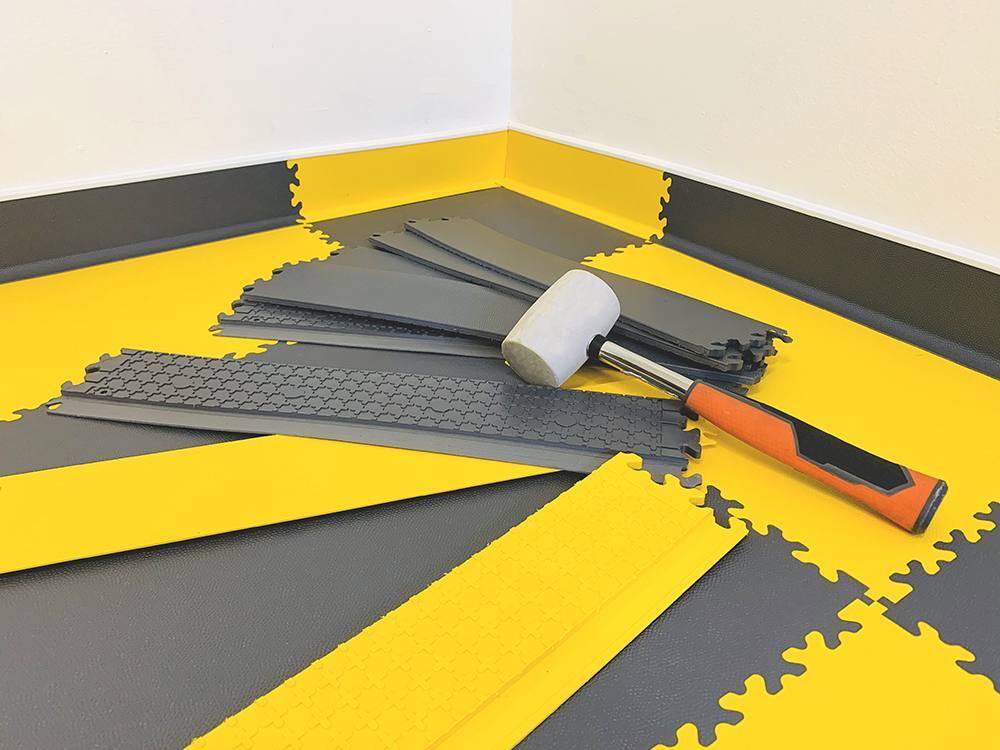
Baseboards are frequently used, especially along walls, to cover the joint.
It is important that the chosen solution does not restrict the flooring’s required freedom of movement.
Frequently Asked Questions
How wide should the expansion joint be for PVC click tiles?
The required joint width depends on the specific PVC flooring system and local conditions. Spacing of about 10 mm is commonly used. However, the manufacturer’s installation instructions always take precedence.
Why should the tiles be left in the room before installation?
PVC reacts to temperature changes. Allowing the tiles to acclimate lets them adjust to the ambient temperature before installation. This helps reduce the risk of dimensional changes later on.
What is used to cover the expansion joint along the wall?
In many cases, baseboards or suitable edge profiles are used. These cover the edge gap and ensure a clean transition between the floor and the wall. It is important to maintain the tiles’ freedom of movement.
What should you do if the PVC flooring has buckled against the wall?
First, check whether there is sufficient clearance from the wall. For non-glued click-lock tiles, affected edge pieces can be removed and adjusted if necessary. Damaged tiles must be replaced if necessary.
Should you leave an expansion joint even around a shelf that rests directly on the tiles?
If a heavy shelf is placed directly on the PVC tiles, it may restrict the floor's ability to move. Depending on the flooring system, additional securing may therefore be necessary. The exact method depends on the manufacturer's installation instructions.